We designed a sensitive and responsive user experience for perinatal mental health support in Onward.
NeuroFlow sought to expand Onward’s capabilities to support users during the perinatal (pre- and post-natal) period. Because Onward serves a broad user base, delivering pregnancy-specific content to the wrong person could be confusing or distressing. I designed the UX for this expansion, collaborating closely with product managers and engineers to ensure the user's journey would be appropriate and helpful throughout.
Targeted Content Pathways
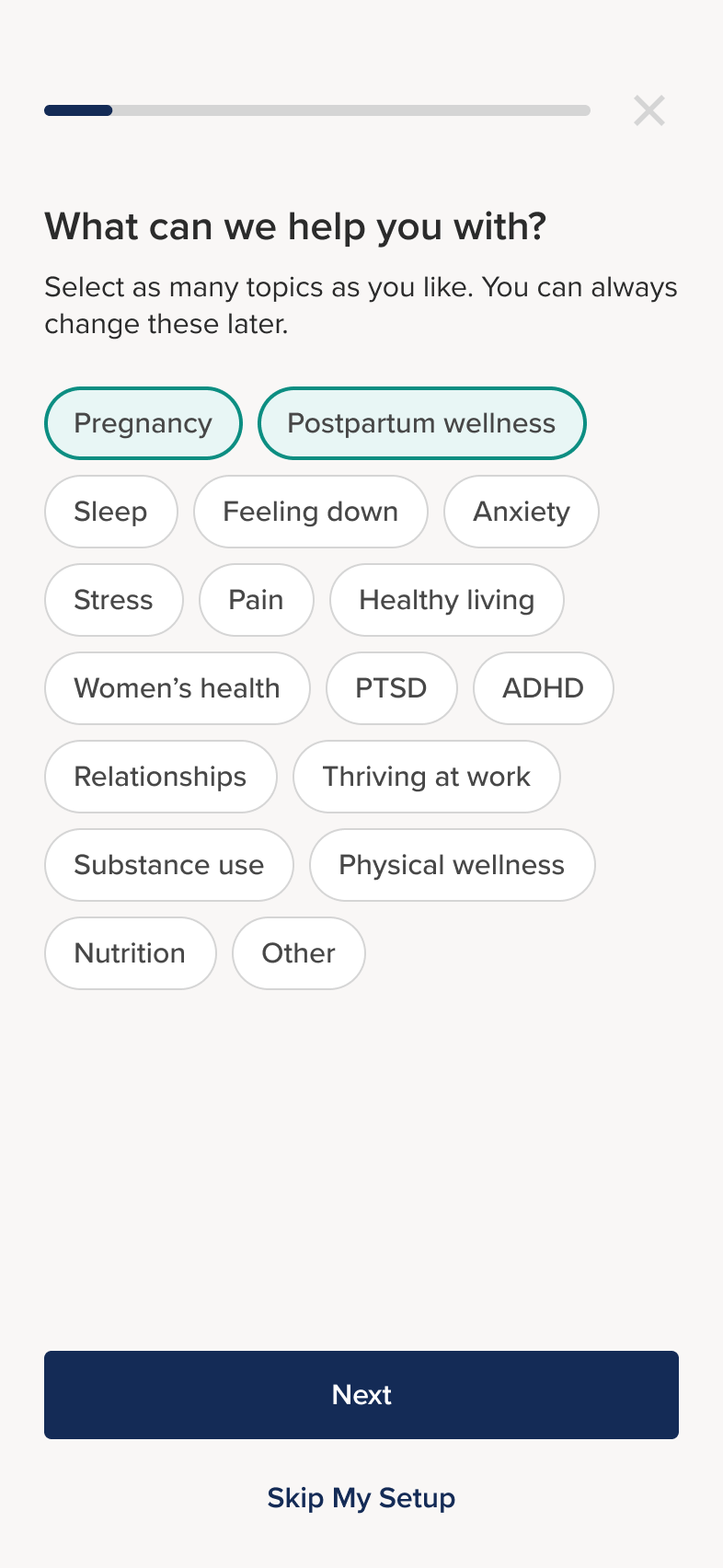
We use several methods to identify users who may benefit from perinatal support. If a user is referred by an OB/GYN, their pregnancy status and due date may be known before they sign up or added by the provider later.
Alternatively, users can self-identify their interest during onboarding or through their account settings. We updated the provider and patient UI in tandem to enable this expanded data capture.
Adaptive Content Delivery
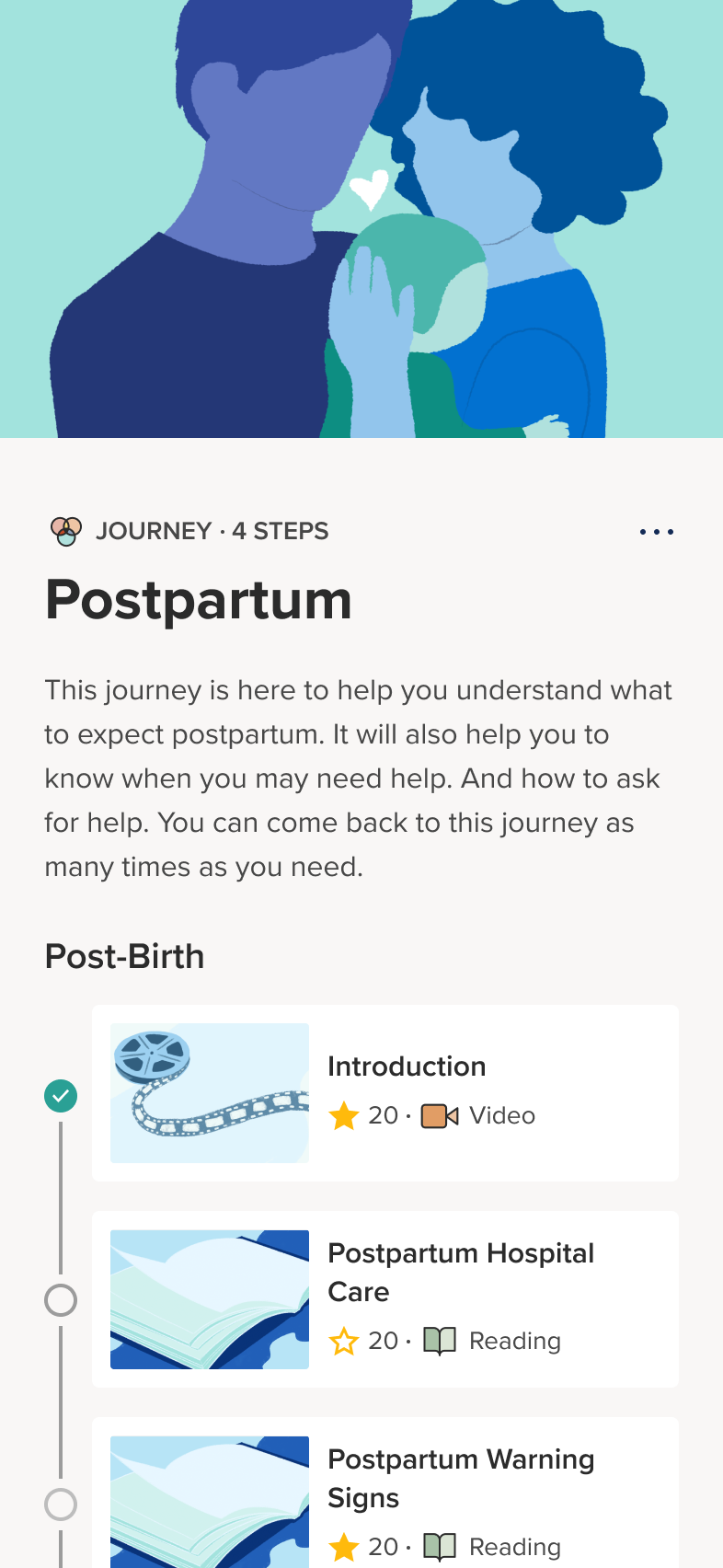
Once a user is in a perinatal pathway, the system delivers Journeys: collections of information and activities curated by clinical experts.
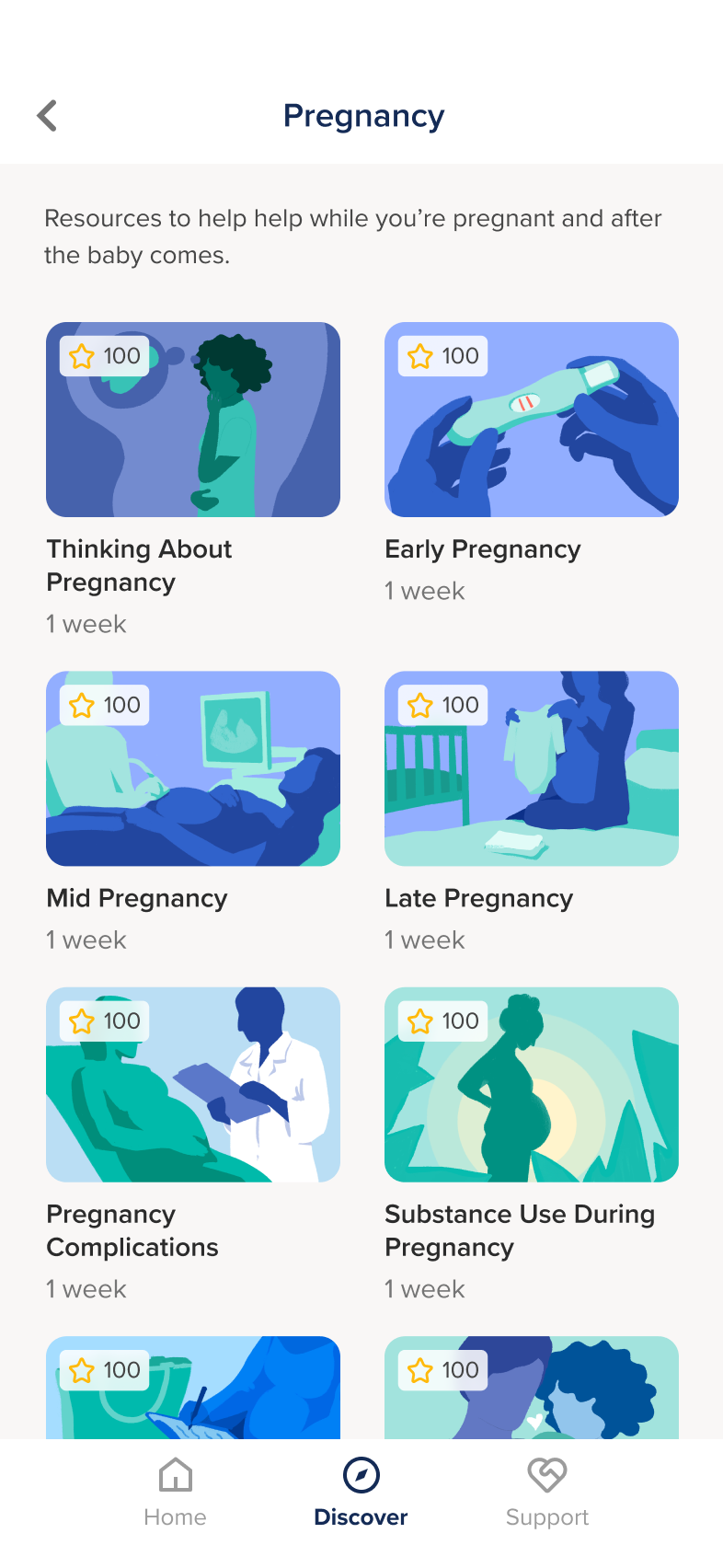
Broadly applicable pregnancy content is synced to the user’s due date so they receive relevant information at each stage of pregnancy. The system also adapts based on assessment responses. For example, a high score on an Edinburgh Postnatal Depression Scale triggers a Journey focused on postpartum depression, while an indication of substance use will trigger a Journey focused on the impact of substuance use during pregnancy. My role was to ensure this responsive experience felt seamless for every user.
Support Beyond Pregnancy
The support continues after a birth or if a pregnancy ends. I worked closely with our clinical team ensure sensitivity in this transition so that the imagery and tone remain appropriate regardless of the user's situation. Our goal was to create a flexible experience that acknowledges the wide range of emotions a person may feel during this time.

Postscript: Leveraging a Scalable Framework
The logic we developed for perinatal content delivery was modular. We have since built upon this framework to support additional use cases, including content related to substance use disorder.